



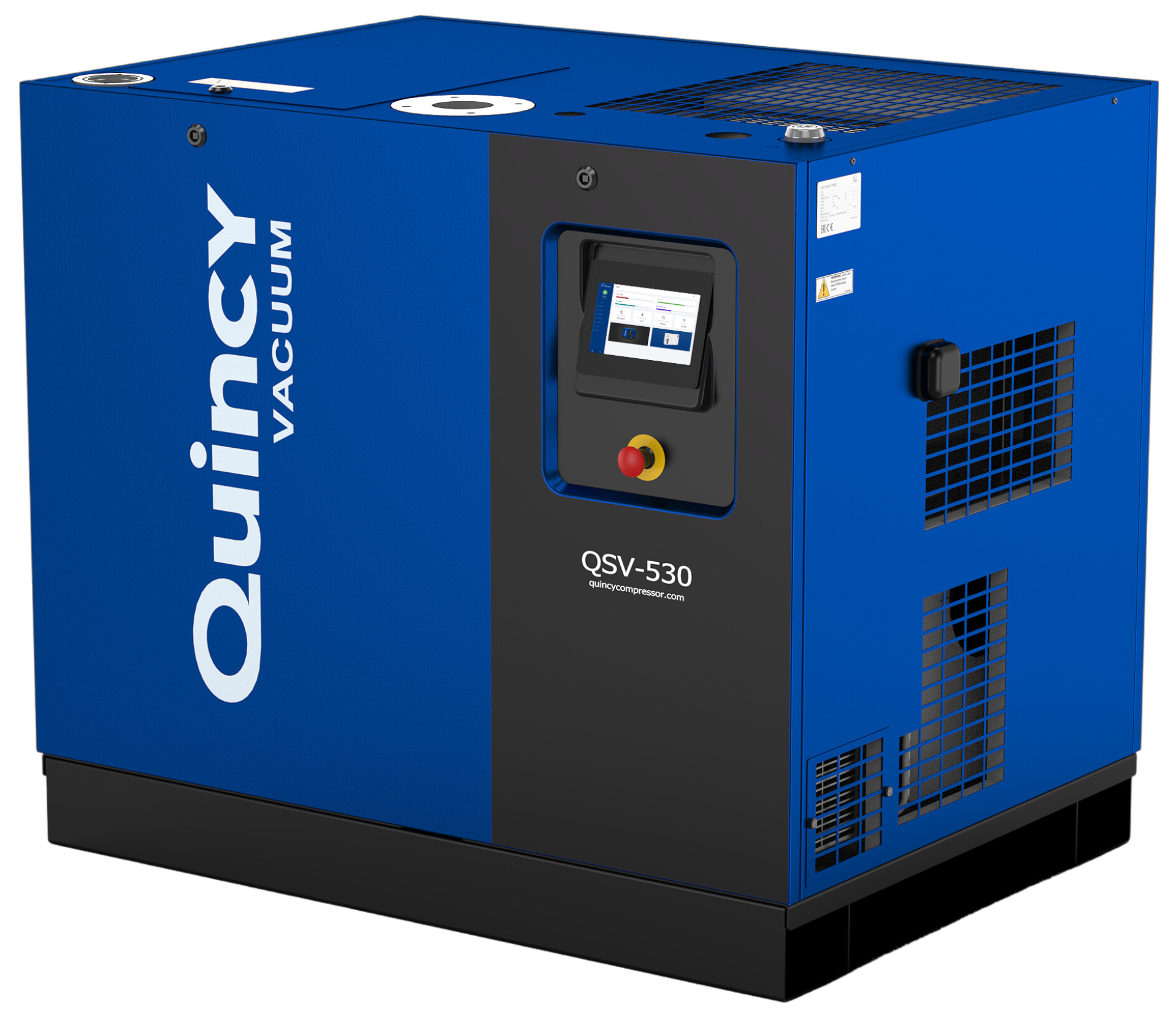

- 7.5-125 hp
- Variable Speed Drive
- 240-3023 ACFM
- Air or Water cooled
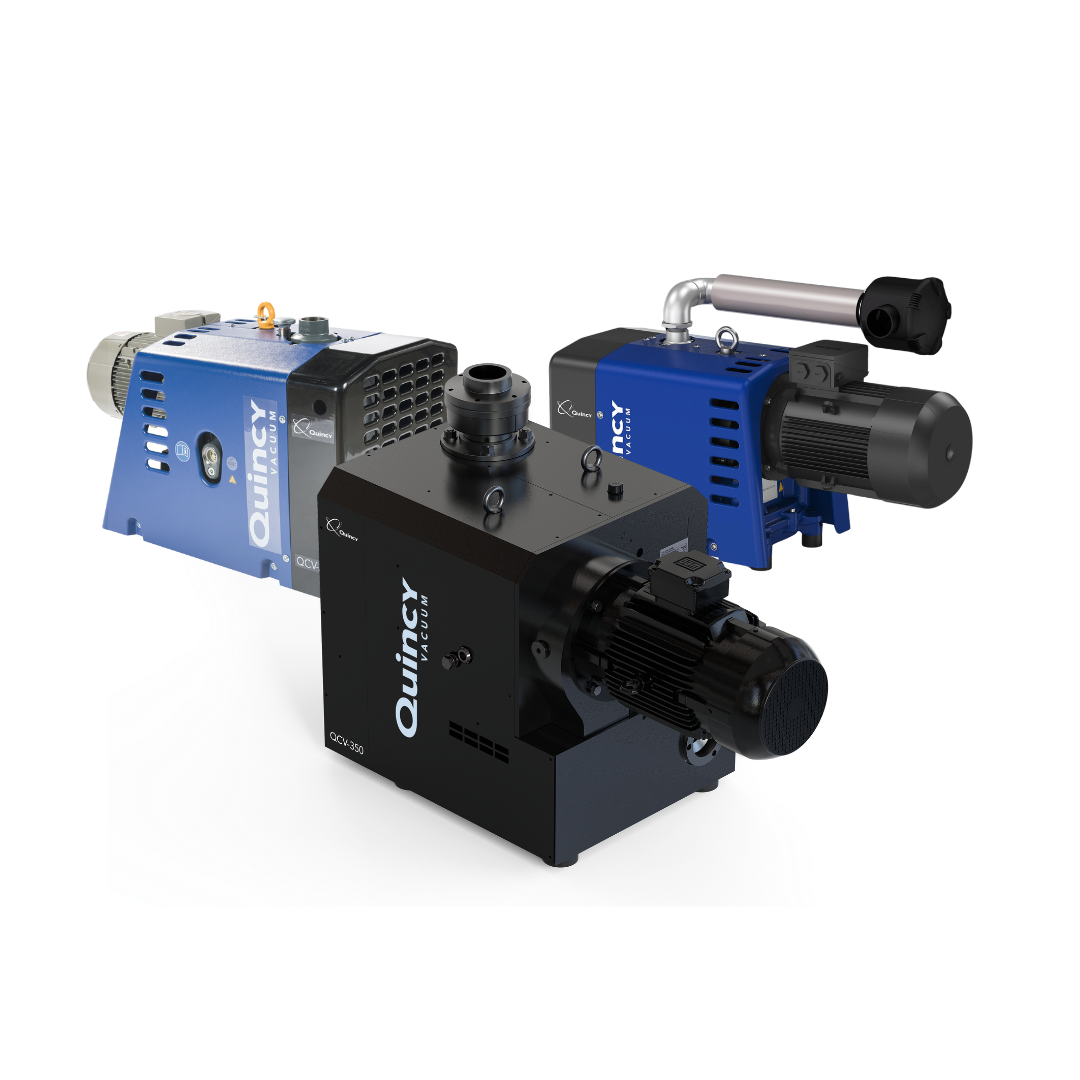
QCV & QCLP - Dry Claw

QV - Oil Sealed Vane
The QV is a series of oil-flooded rotary vane vacuum pumps. Unlike other rotary vane pumps on the market, QV pumps are suitable for continuous use at any vacuum level. A great solution for low flowrate applications, where simplicity is desired.
Buy Parts, Fluid / Oil Request a Quote
Download The Brochure View Product- 1.2-10 hp, Direct Drive
- 17-200 acfm
- All-purpose, rotary vane vacuum pump
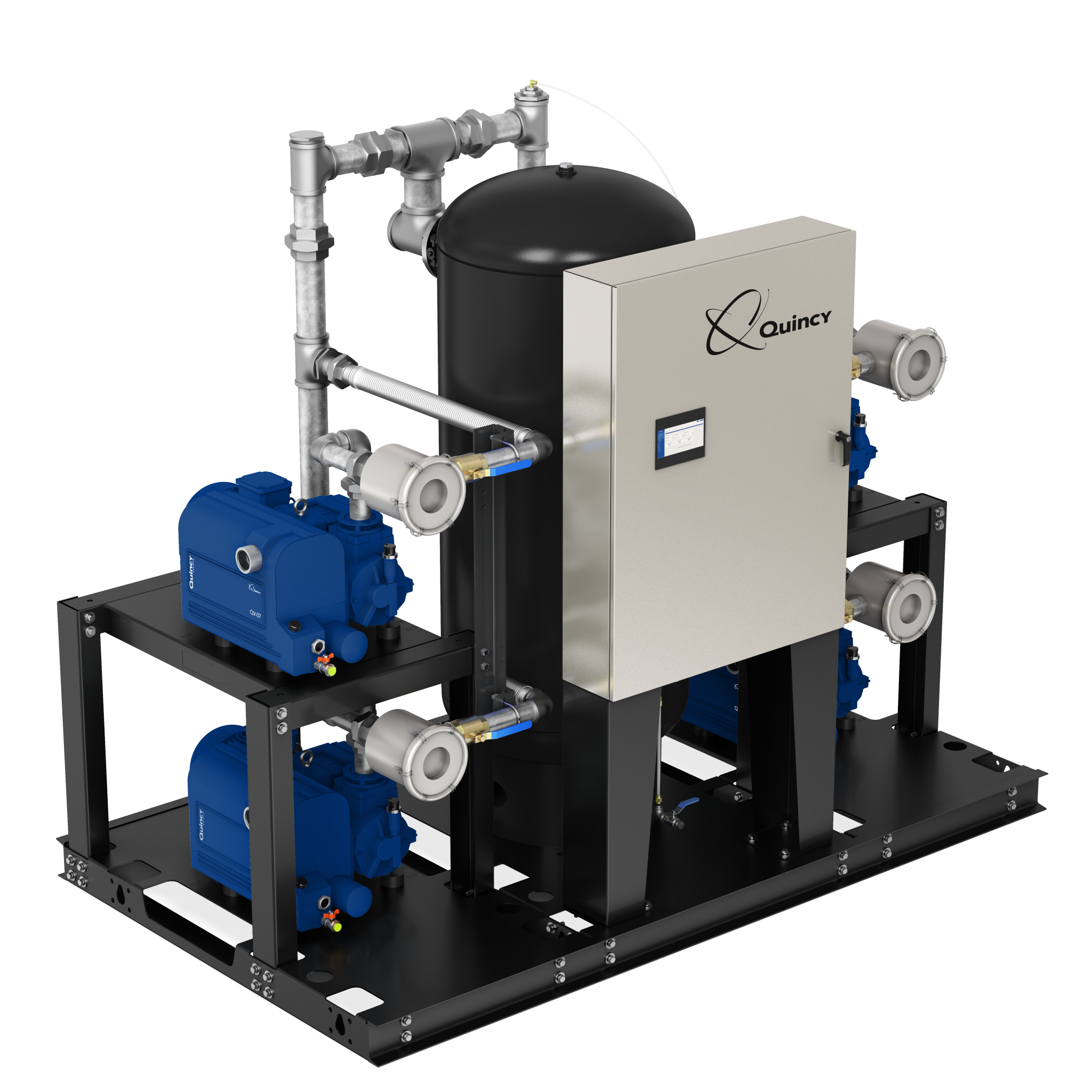
- 1.2-35 HP
- 17-800 ACFM
Configurations Available:
- Industrial, Laboratory, Medical
- Simplex, Duplex, Triplex, Quadruplex
- Horizontal Tank Mount, Vertical Stack Mount
Related Articles
Articles from the Quincy Compressor Blog On Vacuum Pumps

What Is a Vacuum Pump?
A vacuum pump is a device that removes air or other gases from a sealed space to create a vacuum, or an area with lower-than-atmospheric pressure. Unlike an air compressor, which increases air pressure, a vacuum pump creates negative pressure to move, hold or remove materials during industrial processes. The best vacuum pump depends on the required vacuum level, flow rate, operating conditions and the specific application.
How Does a Vacuum Pump Work?
A vacuum pump works by removing air and other gases from a sealed space to create negative pressure. As the pump removes air, the pressure inside the system decreases, creating a vacuum that can be used to hold, lift, transport or process materials.
The exact operating process depends on the type of vacuum pump. For example, a rotary vane pump uses rotating vanes to trap and move air, while other vacuum pumps use different mechanisms to achieve the required vacuum level. Regardless of the design, all vacuum pumps perform the same basic function of removing air to create the pressure difference needed for industrial and commercial applications.
Vacuum pumps are commonly used in processes that require precision, consistent performance and reliable vacuum levels. Choosing the best industrial vacuum pump depends on factors like the required vacuum level, flow rate and operating conditions.
Industrial Vacuum Pump Types
Different vacuum pump types are designed to meet unique vacuum levels, flow requirements and operating conditions:
- Rotary vane: Rotary vane pumps are comprised of a series of vanes that are mounted to a rotor that turns inside a
 cavity. As the vanes rotate, centrifugal force extends them from their individual slots, forming compression cells that get larger to draw air in from the intake and smaller to push air out the exhaust.
 - Articulated piston: An articulated piston industrial vacuum pump operates in a manner similar to that of an automobile engine. As the piston moves downward inside the cylinder, air is drawn in through the intake valve. During the piston’s upward stroke, the air is permitted to escape via an exhaust valve. Two spring-backed piston rings are used to seal the piston to the cylinder.
 cavity. As the vanes rotate, centrifugal force extends them from their individual slots, forming compression cells that get larger to draw air in from the intake and smaller to push air out the exhaust.
- Screw: Rotary screw pumnps include two parallel rotary screws in the pump housing. The screws are synchronized to turn in opposite directions, which causes the compression action to occur. The gas is compressed in the direction of the pump’s discharge port.
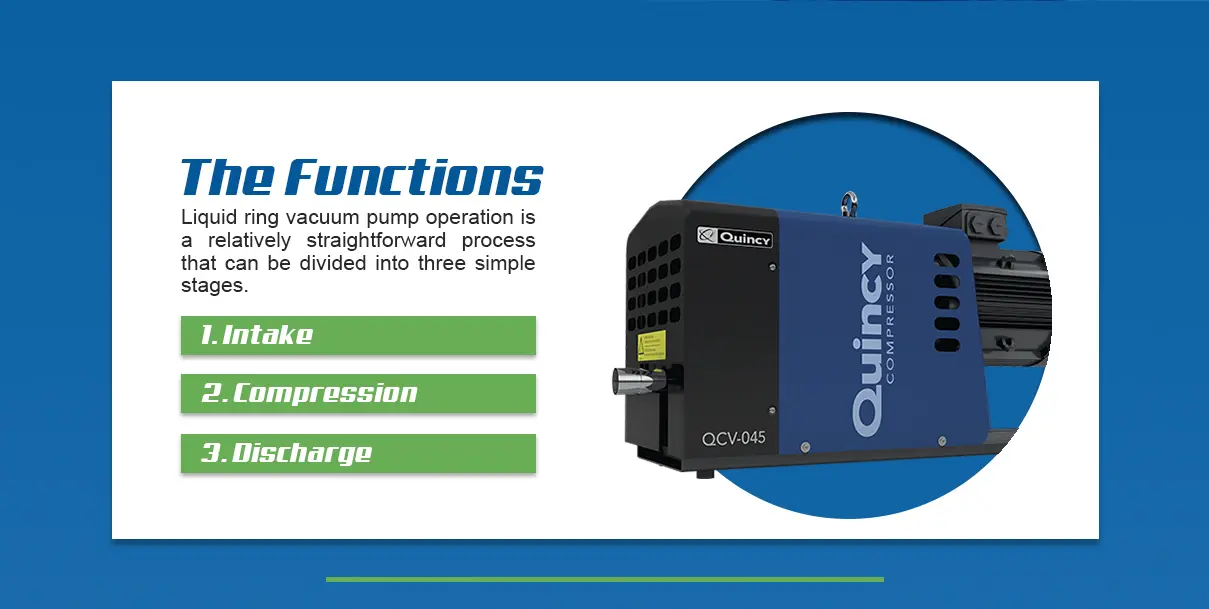
- Liquid ring: Liquid ring pumps also operate via positive displacement. During operation, the pump’s impeller rotates inside the pump casing. A rotating liquid ring then seals the impeller and its blades. Liquid is sucked into the compression chamber to keep the ring stable. Conveyed gas is compressed during each impeller revolution.
- Claw: Claw vacuum pumps consist of two rotors that are very close but do not come in contact with one another during rotation. As the rotors turn, they physically enlarge the space between them to draw in air, then, as they rotate around, they physically reduce the space between them to compress the air out of the chamber.
Vacuum Pumps vs. Air Compressors: What’s the Difference?
Although vacuum pumps and air compressors both move air, they perform opposite functions. An air compressor increases air pressure to power tools and equipment, while a vacuum pump removes air to create negative pressure for holding, lifting, packaging or processing materials.
The main differences include:
- Pressure: Air compressors create positive pressure by forcing air into a system. Vacuum pumps create negative pressure by removing air from a sealed space.
- Applications: Air compressors are commonly used to power pneumatic tools, operate machinery and supply compressed air. Vacuum pumps are used for packaging, material handling, medical equipment, woodworking and other applications that require suction or vacuum pressure.
- Operating goals: Air compressors deliver pressurized air to perform work, while vacuum pumps remove air to create the vacuum required for specific industrial processes.
Some manufacturing and processing facilities use both systems because they perform different but complementary functions. Understanding how each works can help you select the right equipment for your application.
Industry Applications for Vacuum Pumps
Vacuum pump suppliers can offer you pumps used in many industries, supporting manufacturing processes and improving production efficiency. Common applications for industrial vacuum pumps include:
- Packaging and labeling: Vacuum pumps help remove air from packaging to extend product shelf life and improve product protection. They are also used in automated labeling systems to hold products securely during production.
- Woodworking: Vacuum pumps create the suction needed to hold materials in place during cutting, routing, sanding and other machining processes. This helps improve accuracy while reducing material movement.
- Medical and dental applications: Vacuum pumps support suction systems used during medical and dental procedures, as well as laboratory equipment that requires reliable vacuum performance.
- Food processing: Vacuum technology is used throughout food processing to assist with packaging, conveying, sealing and other applications where product quality and freshness are important.
- Plastic forming: Vacuum pumps remove air during thermoforming and vacuum forming processes, allowing heated plastic to conform accurately to molds and produce consistent, high-quality components.
Frequently Asked Questions
Get your pressing questions on vacuum pumps and systems answered.
1. What Is Continuous Duty for a Vacuum Pump?
Continuous duty is a vacuum pump’s ability to operate for extended periods without overheating or losing performance. Continuous-duty vacuum pumps are designed for applications that require a consistent vacuum level throughout the workday, making them a reliable choice for demanding industrial environments.
2. What Is a Vacuum Pump Used For?
A vacuum pump is used to remove air or other gases from a sealed space to create negative pressure. Vacuum pumps support a wide range of applications, including packaging, material handling, woodworking, medical and dental procedures, food processing, plastic forming and manufacturing processes that rely on vacuum pressure.
3. What Type of Vacuum Pump Do I Need for Packaging, Printing or Woodworking?
The best vacuum pump depends on the application, required vacuum level, duty cycle and operating environment. For example, packaging systems often require reliable continuous-duty performance, while woodworking applications typically use vacuum pumps to hold materials securely during machining. Choosing the right pump starts with understanding the specific requirements of your process.
4. Is a Rotary Vane or Rotary Screw Vacuum Pump Better?
Neither option is universally better. A rotary vane pump is often selected for applications that require a compact design and dependable vacuum performance, while rotary screw vacuum pumps are commonly used in larger industrial environments that demand continuous operation and high efficiency. The right choice depends on your vacuum requirements, operating conditions and production goals.
How to Choose the Right Industrial Vacuum Pump System for Your Needs
Each industrial vacuum pump type has its advantages and disadvantages. Which vacuum pump type is right for a given process is dependent on the process itself, the environment the pump will be operating in, and the owner’s ability and willingness to do maintenance.
Contact Quincy Compressor or one of our authorized distributors to learn more about how to choose the best pump for your applications.
To learn more about Quincy Vacuum Pumps, check out our related resources:
What’s The Difference Between Vacuum Pumps And Air Compression
Vacuum Level: What’s a Few Inches Here or There?
Your local authorized Quincy Compressor distributor will be happy to explain the features and benefits of each vacuum pump in more detail. You can also contact us directly if you have additional questions.