



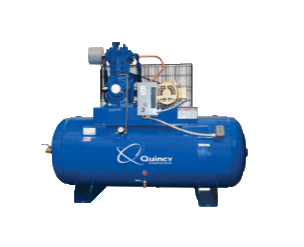
QR-25

More about the QR-25
More about the QR-25
Our premium pressure-lubricated piston air compressor is the QR-25. It’s a heavy-duty compressor that is pressure lubricated in critical areas and delivers up to 25 hp. Available in single- and two-stage versions, the QR-25 is designed to operate at slower speeds and is equipped with intake unloaders that minimize work. The rugged cast iron construction ensures a long life expectancy, less downtime and easier maintenance.

Other Key Features
Other Key Features
Other key features include loadless starting, a manually reversible oil pump and rebuildable components. Seen as the industry standard in piston compressor technology, the performance of Quincy’s QR-25 is legendary.

- 1-25 hp
- 3-95 acfm, 20-500 psig intermittent
- Single and Two Stage
- Cast iron full-pressure lubricated
- 5-Year limited warranty
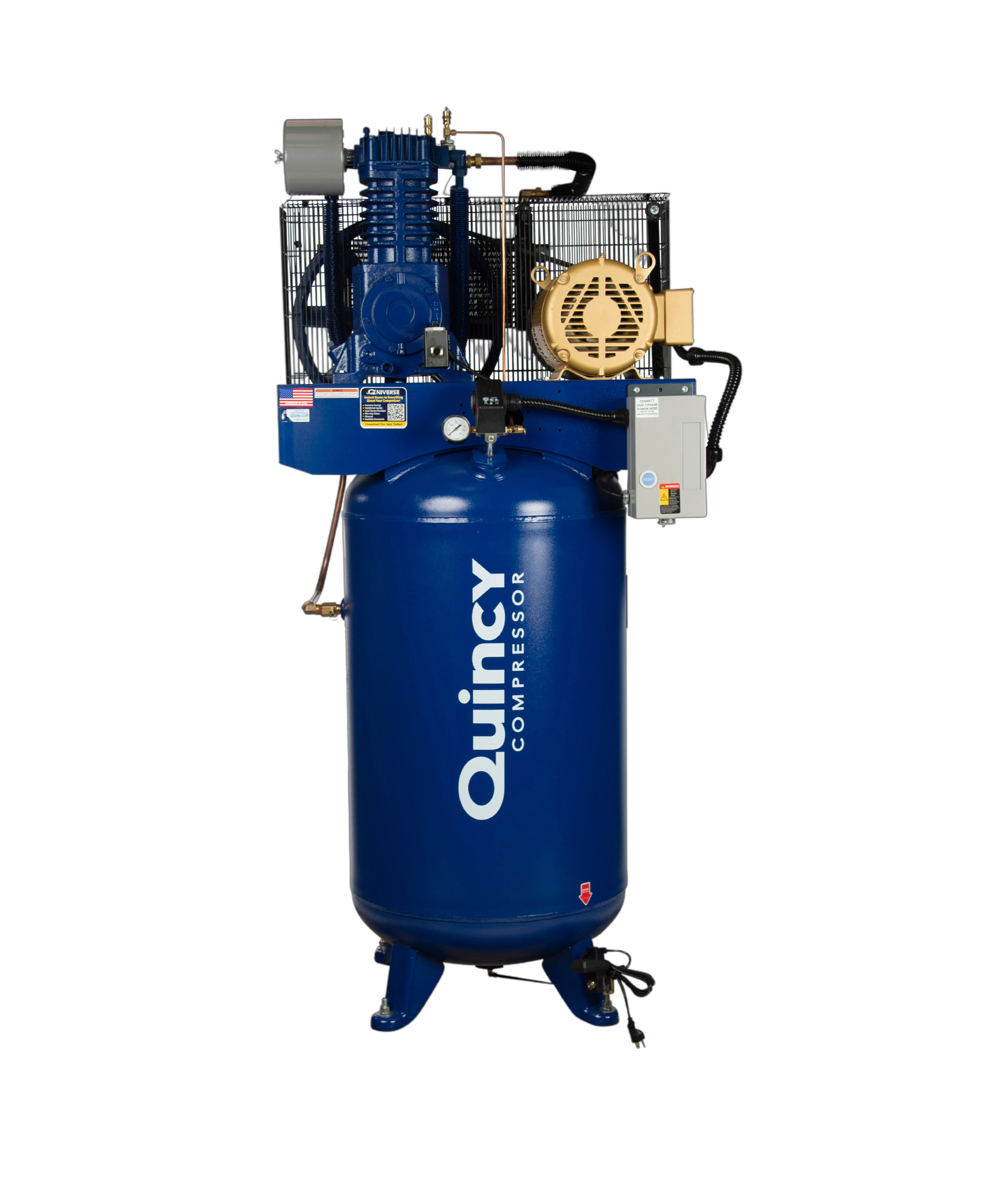
QT
More about the QT
More about the QT
Our two-stage splash-lubricated QT piston air compressor models are designed to deliver higher volumes of air while also consuming less energy. The special valve design provides high volumetric efficiency and features super-strong stainless steel valves. The balanced counter-weighted crankshaft ensures smooth operation and fewer maintenance issues. The cast-iron construction also assures a long compressor lifespan. The QT series is available with Pro, Pro+ and Max unit configurations.
- 5-15 hp
- 17-51 acfm, 175 psig maximum
- Two Stage
- Cast iron splash lubricated
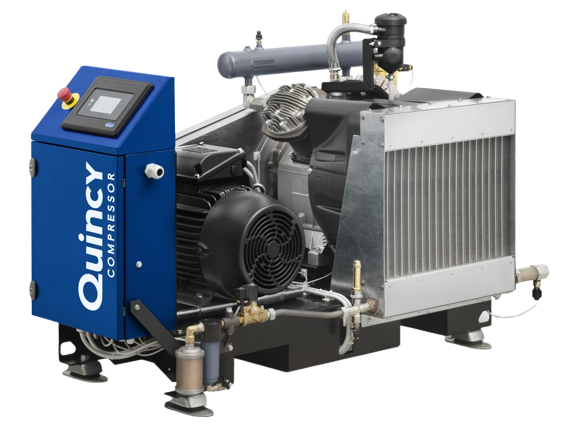
QB
More about the QB
More about the QB
The QB series reciprocating boosters are designed for high-pressure air and nitrogen applications. The QB boosters have a 360 psi and 580 psi option, and power ranges from 10 to 40 hp. They’re offered in standard configuration or full-feature configuration, which includes an aftercooler and unit-mounted Q-control touch.
- 10-40 hp
- 360 or 580 psi
- Full Feature available with aftercooler and Q-control
QP
More about the QP
More about the QP
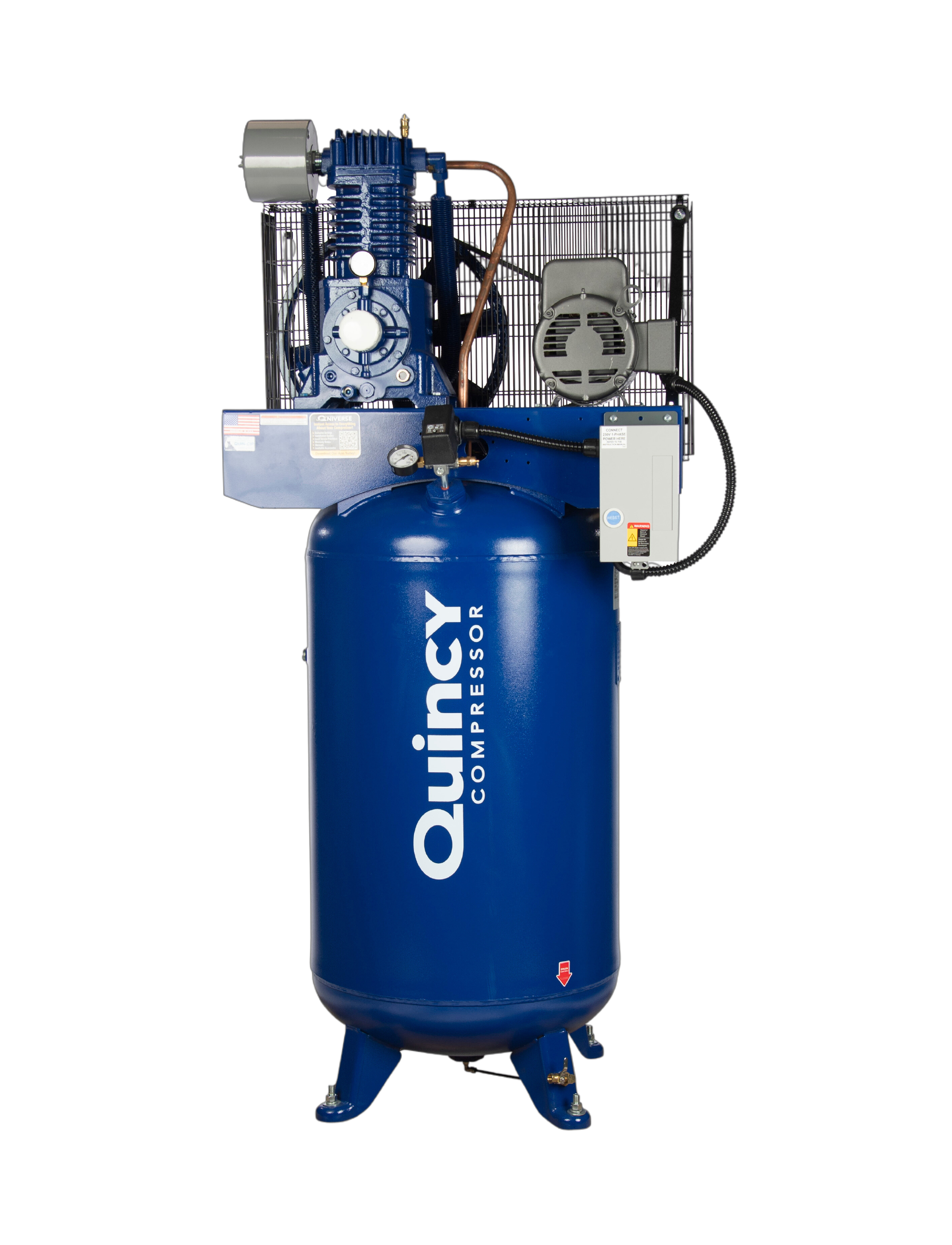
The QP is a two-stage pressure-lubricated air compressor featuring a working pressure of 175 PSI for your more challenging compressed air applications. Key QP features include a cast iron crankcase, flywheel and cylinder, a reliable positive displacement oil pump and a high efficiency intercooler. The QP series is available with Pro, Pro+ and Max unit configurations.
- 5 to 15 HP
- 175 PSI Working pressure
- Oil filter and pressure gauge
- Fully pressure lubricated
Climate Control

More about Climate Control
More about Climate Control
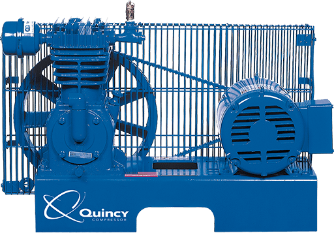
Our application-specific air compressor models include climate control systems that are designed and engineered for efficient and effective climate control in diverse types of operating environments. The options include Simplex Splash Lubricated Tank-Mount models that include an ASME pressure relief valve, a pressure gauge, a manual shut-off at tank discharge and a manual tank drain. A Duplex Splash Lubricated Tank-Mount model with a Duplex Control Panel and optional dryer is also available.
- 0.5-20hp
- 4-88 acfm, up to 100 psig service
- Single and Two Stage
- 2 ppm carry over factory certified
Single Stage and Portable
More about Single Stage & Portable Compressors
More about Single Stage & Portable Compressors
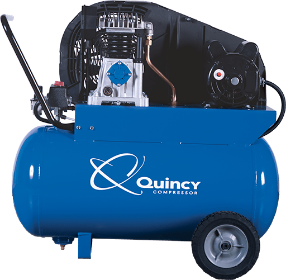
Our stationary and portable single-stage piston air compressors are ideally suited for commercial compressed air applications and smaller DIY projects. Despite their small size, they feature a rugged cast-iron construction that supports maximum durability. Key product features include a cast iron cylinder and crankshaft, an aluminum head and a fully enclosed belt guard.
- 4 to 12.4 acfm
- 110 to 145 psi
- Single Stage
Related Articles
Articles from the Quincy Compressor Blog On Reciprocating Piston Air Compressors
What Is a Reciprocating Air Compressor?
A reciprocating air compressor, also known as a reciprocating piston compressor or piston air compressor, uses one or more pistons to compress air and deliver it to a storage tank for later use.
Unlike rotary screw compressors that provide a continuous flow of compressed air, reciprocating compressors are typically best suited for intermittent applications requiring high pressure.
Benefits of a Reciprocating Air Compressor
Some of the critical benefits of a reciprocating air compressor are:
- High pressure and power: Reciprocating compressors can push out high pressure and energy, even though they are compact.
- Low maintenance costs: These compressors have fewer moving parts than others, leading to less wear and tear and fewer part replacements.
- Improved efficiency: Reciprocating compressors can be used intermittently and do not need to run continuously. They produce high power at low energy levels. They are best used when turned on and off frequently.
- Longer product life: As these compressors do not run repeatedly, they are less likely to need repairs. You can get more time out of your compressor.
- Compact design: These compressors are smaller than other styles, making them easy to transport and place closer to the work site. If you work in oil and gas, a portable compressor can help on multiple sites.
Quincy Compressor offers several reciprocating air compressors for a wide range of industries. Browse our inventory of air compressors to discover which one is best for you.
How Reciprocating Air Compressors Work
Compressors decrease the amount of space air takes up by compacting it. A reciprocating compressor is a positive-displacement air compressor that uses a crankshaft-powered piston and cylinders. Our piston air compressors use either a single- or two-stage process to compress air.
Compressing air decreases its volume and increases its density without changing it to a liquid. Here is how a reciprocating air compressor works:
- Gas enters the cylinder through the intake valve.
- The piston pulls away from the intake valve and allows the gas to pass into the cylinders.
- The crankshaft powers the piston, which compresses the gas in one stroke of about 120 pounds per square inch (psi) of pressure.
- In two-stage compressors, air travels to a second cylinder for another round of compression. A second piston compresses the gas at a pressure rate of 175 psi.
- Once complete, the compressed air is sent to a storage tank for use.
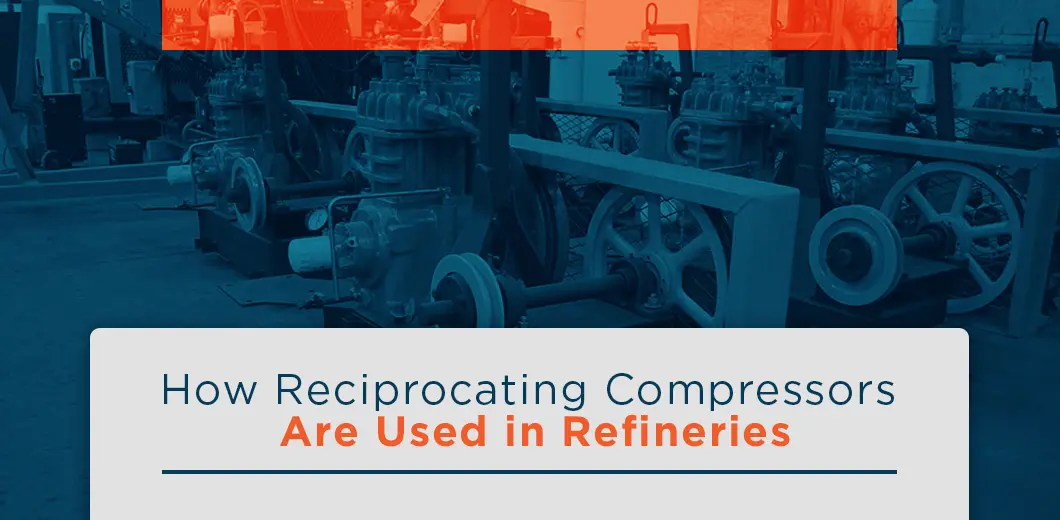
Reciprocating air compressors are compact options that workers can use in natural gas processing and delivery, and oil refining. These air compressors work across industries to give you powerful compression.
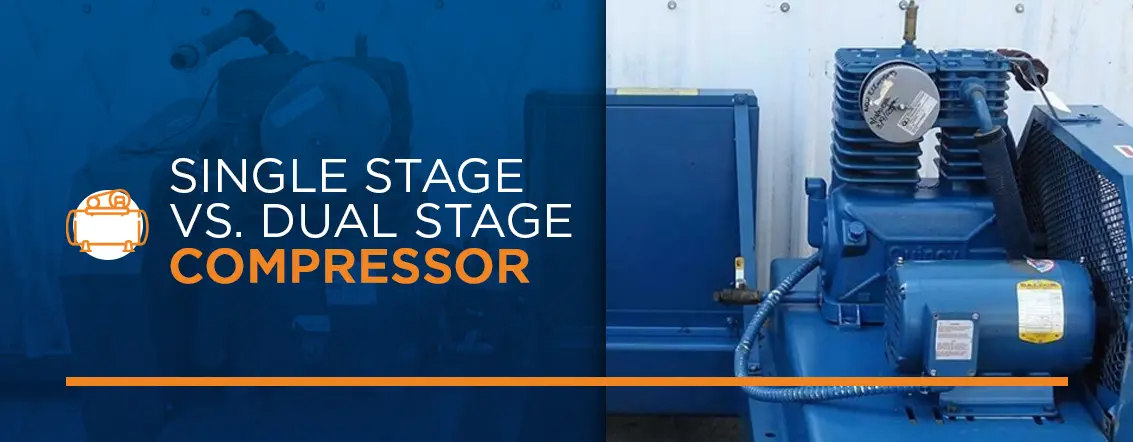
Single Stage vs. Two Stage Reciprocating Compressors
Single-stage and two-stage reciprocating compressors both use pistons to compress air, but they differ in the number of compression cycles they use and the pressure they can produce.
Single-Stage Reciprocating Compressors
A single-stage air compressor compresses air once before delivering it to the storage tank. It is commonly used for lighter-duty applications that require lower operating pressures and intermittent operation.
Single-stage compressors are ideal for:
- Intermittent use: A good choice for applications where compressed air is needed periodically rather than continuously.
- Lower CFM requirements: Suitable for powering smaller air tools and equipment with moderate airflow demands.
- Operating pressures around 110-145 psi: Commonly used in automotive repair shops, home garages, maintenance departments and small workshops.
Two-Stage Reciprocating Compressors
A two-stage reciprocating compressor compresses air twice before sending it to the storage tank. This two-step process allows the compressor to achieve higher operating pressures while maintaining reliable performance in demanding environments.
Two-stage compressors are ideal for:
- Continuous-duty applications: Designed for facilities that require compressed air throughout the workday.
- Higher CFM requirements: Well-suited for larger equipment and applications with greater airflow demands.
- Operating pressures between 100 and 175 PSI: Commonly used in manufacturing, fabrication and other industrial environments.
- Improved efficiency and longer service life: Built to handle demanding workloads while supporting consistent performance over time.
Applications and Industries
Reciprocating piston air compressors are used across a wide range of industries because they provide reliable compressed air for intermittent and high-pressure applications. Depending on the model, reciprocating piston air compressors can support a range of operating pressures, from lower-pressure single-stage applications around 110-145 psi to two-stage applications up to 175 psi. Specialty models and boosters may support higher intermittent pressures.
Common applications include:
- Automotive repair: Powering impact wrenches, spray guns, tire inflation equipment and other pneumatic tools used in repair shops and service centers.
- Manufacturing: Supporting production equipment, assembly lines, material handling systems and general plant operations that require compressed air.
- Construction: Operating nail guns, jackhammers, drills, sanders and other portable air tools on construction sites.
- Agriculture: Providing compressed air for equipment maintenance, irrigation systems, livestock operations and general farm applications.
- Maintenance and workshops: Delivering dependable compressed air for equipment servicing, cleaning, painting and routine maintenance tasks in commercial and industrial facilities.
Frequently Asked Questions
Get your pressing questions on reciprocating piston air compressors answered.
1. How Does a Reciprocating Compressor Unloader Work?
A reciprocating compressor unloader temporarily releases compressed air or prevents compression during startup or idle periods. This reduces the load on the motor, making it easier for the compressor to start while helping minimize wear on system components.
2. What Can You Use Reciprocating Compressors For?
Reciprocating compressors are used to power pneumatic tools, operate manufacturing equipment, inflate tires, support construction projects and provide compressed air for maintenance, agricultural and industrial applications. They are commonly chosen for applications that require high pressure and intermittent operation.
3. Is an Oil-Free or Oil-Lubricated Reciprocating Compressor Better?
The best option depends on the application. Oil-lubricated reciprocating compressors are widely used in general industrial environments because they offer durability and reliable performance. Oil-free compressors are better suited for applications that require clean, contaminant-free compressed air, like food processing, healthcare and pharmaceutical manufacturing.
4. What Is Another Name for a Reciprocating Compressor?
A reciprocating compressor is also known as a piston air compressor, reciprocating piston compressor or reciprocating air compressor. These terms all refer to compressors that use one or more pistons to compress air.
5. What Is the Main Function of a Reciprocating Compressor?
The main function of a reciprocating compressor is to compress atmospheric air and deliver it at a higher pressure for use in pneumatic tools, machinery, manufacturing processes and other applications that rely on compressed air.
Your Local Quincy Distributor Offers a Wide Selection of Reciprocating Air Compressor Parts
Your Quincy Compressor dealer is your go-to source for the reciprocating air compressor parts you need to keep your unit up and running, whether you need fluid for maintenance, an air compressor piston, pump, belt or other vital part or component.
Ask your dealer about our tough, tougher and toughest piston air compressor options.
Ready to learn more about properly maintaining your reciprocating air compressor? Follow the link to learn more about oil and maintenance.
Click here to find the right air compressor for your industry-specific application.