



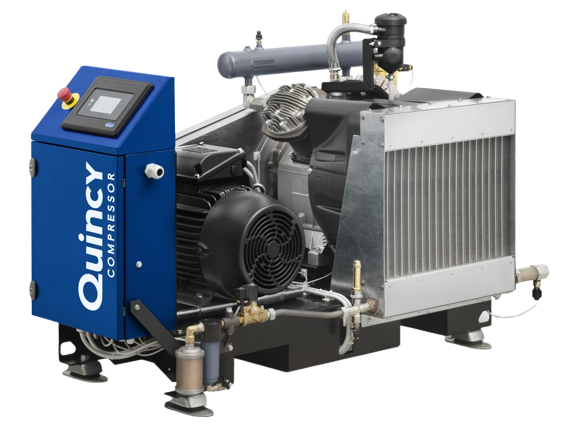
QB Series

More about QB Series
More about QB Series
Designed for high-efficiency boosting of air and nitrogen, the QB Boosters have the versatility and functionality to support the most demanding high-pressure applications. The QB boosters are featured with either a 360 or 580 psi selection, with power ranging from 10 to 40 hp.

Key Industries and Applications
Key Industries and Applications
- Polyethylene terephthalate (PET) bottle manufacturing
- Industrial pressure testing
- Oil and gas production and transportation
- Metal fabrication (e.g., Laser cutting)
- Automotive glass production
- Laboratory / Testing
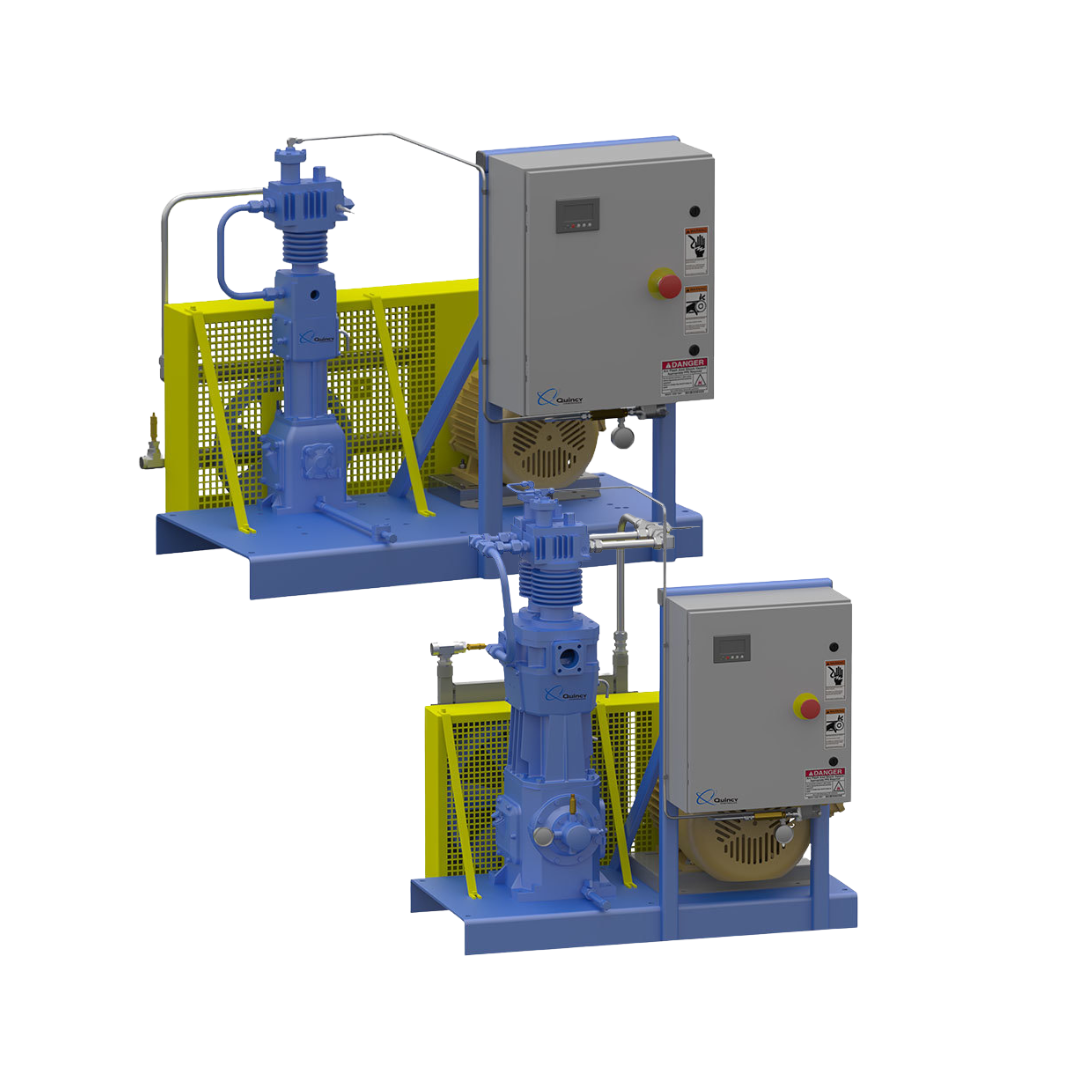
Odyssey Line
More about Odyssey Line
More about Odyssey Line
The Quincy Compressor QDS Odyssey oil-free high-pressure piston booster lineup offers capabilities up to 600 PSI and 500CFM for both air and nitrogen while providing the most reliable performance in the industry. Designed and made in the USA, the innovative Odyssey design provides a wide range of features and options to handle your most demanding applications. Models range from 5 to 75 horsepower with the capability to double output in duplex configurations.
Key Industries and Applications
Key Industries and Applications
- Food and beverage
- Manufacturing
- PET Bottle Blowing and Conversion
- Fabrication and Nitrogen laser cutting
- Starting Air
- Ultra-Pure Cleaning
Related Articles
Articles from the Quincy Compressor Blog On Air & Nitrogen Boosters
What Are Air and Nitrogen Boosters?
Air and nitrogen boosters are specialized systems designed to increase the pressure of existing compressed air or nitrogen. Unlike standard compressors that draw in atmospheric air, air compressor boosters take in already compressed air or nitrogen and elevate it to the discharge pressure required for specific industrial processes.
A nitrogen gas booster is engineered to safely handle nitrogen in applications where air purity or inert atmospheres are critical, including laser cutting, pressure testing or bottle blowing. A high-pressure air booster operates on the same principle but is designed for compressed air systems.
Air Compressor Booster vs Standard Compressor
A standard air compressor generates compressed air, while an air compressor booster increases pressure from an existing compressed air source. Boosters are used when you need higher outlet PSI without replacing your primary compressor.
How Compressed Air Boosters and Nitrogen Boosters Work
Air and nitrogen booster compressors follow a straightforward four-step pressure amplification process:
- Inlet supply connection: The booster receives compressed air or nitrogen from your facility’s system at inlet pressures typically between 80 and 145 psi.
- Pressure amplification: A reciprocating piston mechanism compresses the inlet gas to a significantly higher pressure using differential piston ratios. Single-stage boosters can increase pressure 1.3 to 4 times the inlet pressure, while two-stage models boost pressure 3 to 10 times.
- Heat removal: The compressed gas passes through an aftercooler, which removes heat generated during compression.
- High-pressure output: The amplified gas is discharged at the required elevated pressure to the application, vessel or downstream system.
Most air compressor boosters include automatic shut-off and regulation features that maintain consistent output pressure without continuous manual intervention.
Why Nitrogen Boosters Are Needed
Many industrial facilities maintain standard compressed nitrogen systems designed for 80 to 145 psi. When processes demand higher pressures, three options exist:
- Install a stand-alone high-pressure nitrogen compressor
- Pressurize the entire plant system
- Add a high-pressure booster to the existing infrastructure
A nitrogen gas booster is one of the most cost-effective and energy-efficient solutions. Rather than replacing an entire system, facilities can dedicate a booster to specific applications. This flexibility provides elevated pressure where needed without the capital expense of overhauling plant-wide infrastructure.
Applications for Air and Nitrogen Boosters
Compressed air boosters and nitrogen booster systems serve diverse industries with high-pressure requirements.
- Plastics: PET bottle blowing operations use high-pressure nitrogen to form plastic containers.
- Metal fabrication: Metal cutting and fabrication facilities rely on nitrogen boosters for laser cutting, requiring both purity and pressure.
- Automotive: Automotive assembly requires a consistent supply of high-pressure air.
- Oil and gas: Oil and gas operations rely on air booster compressor systems for pressure testing pipelines and equipment.
- Pharmaceutical and food production: Pharmaceutical and food production facilities require oil-free nitrogen at elevated pressures for fermentation, packaging and clean room operations.
- Industrial testing and research: Industrial testing, research facilities and quality control operations use boosters to validate equipment and test products.
Frequently Asked Questions About Air and Nitrogen Boosters
Understanding the differences between boosters and compressors helps you select the right solution for your facility’s high-pressure requirements.
When Do I Need a Booster Instead of a High-Pressure Compressor?
A booster makes sense when you have a compressed air system operating at standard pressure and need elevated pressure for specific applications. Adding a booster to existing infrastructure costs less and operates more efficiently than installing a stand-alone high-pressure compressor.
What Are Air Boosters Used For?
Air boosters are used in applications that require pressures beyond those of standard compressed air systems. Common uses include PET bottle manufacturing, industrial pressure testing, pneumatic tools, component assembly, cylinder filling and oil and gas operations.
What Is the Difference Between a Compressor and a Booster?
A compressor draws in atmospheric air and compresses it to a specified pressure. A booster takes already compressed air or gas and increases it to a higher discharge pressure. Boosters operate downstream of standard compressors, using the existing compressed air as their inlet supply.
What Pressure Can an Air Booster Achieve?
Single-stage units typically achieve pressures up to 400 psi, while two-stage models reach 600 psi or higher. Quincy Compressor offers standard models with capabilities up to 600 psi, with custom solutions available for applications requiring up to 3,000 psi.
What Gases Can Booster Systems Handle?
While air and nitrogen are the most common applications, booster systems can handle various gases, including argon, carbon dioxide, helium and natural gas. Each gas and application combination requires proper sizing and configuration for safe, reliable operation.
Find the Right Air or Nitrogen Booster for Your Application
Selecting the right nitrogen booster or air compressor booster means matching output pressure, flow rate and duty cycle to your specific operation. Quincy Compressor’s authorized sales and service representatives are equipped to evaluate your requirements, answer your technical questions and recommend the right solution for your system.
Our network of experts can help you determine the right booster solution for your high-pressure requirements. Whether you need an air booster for testing or a nitrogen booster compressor for production, our representatives will evaluate your inlet pressure, required discharge pressure and flow demands to recommend a tailored system.
Contact a Quincy Compressor representative to learn more.