



18 Ways to Reduce Your Compressed Air Costs

Key Takeaways: Reducing compressed air costs requires proactive operational strategies, including shutting off compressors during off-hours, regularly detecting and repairing air leaks, and using zero-loss condensate drains. Optimizing system efficiency involves lowering discharge pressure to match exact requirements, ensuring proper pipe sizing to minimize pressure drop, and maintaining clean filters. Achieving long-term savings depends on […]
Read MoreOverview of Air Compressor Accessories
Key Takeaways: Air compressor accessories enhance system performance, protect equipment from damage, and ensure clean, reliable airflow. Devices like dryers, filters, and regulators are crucial for eliminating moisture and contaminants while maintaining precise pressure levels. Strategic use of storage tanks, lubricators, and hoses optimizes energy efficiency and extends the lifespan of pneumatic tools. The air […]
Read MoreThe Value of Logging and Auditing an Air Compressor System

Key Takeaways: Compressed air systems account for significant energy waste across industries, largely because many facilities fail to audit, log, and manage their system efficiency. Establishing an energy baseline through continuous data logging allows businesses to detect inefficiencies, reduce power consumption, and qualify for energy efficiency incentives. Regular monitoring and data analysis help diagnose unexpected […]
Read MoreInside the Energy Efficient Design of Variable Speed Compressors
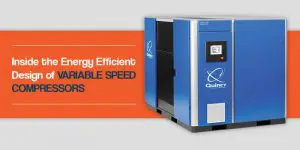
Key Takeaways: Variable speed compressors utilize specialized drives to adjust motor speed in real time, matching airflow output to actual demand and significantly reducing energy consumption. Variable speed technology delivers consistent pressure, protects against power surges, lowers starting currents, and minimizes wear on mechanical components. Investing in variable speed compressors like the Quincy QGV line […]
Read MoreThe Benefits of Efficient Air Compressors

Key Takeaways: Efficient air compressors reduce energy use, operating costs, emissions, maintenance needs, and equipment wear. Leaks, pressure drops, overpressurization, poor controls, clogged filters, and improper sizing are common sources of wasted energy. Regular audits, leak repairs, pressure adjustments, heat recovery, filter changes, and preventive maintenance can improve system efficiency. There are many uses of […]
Read MoreComplete Guide to Rotary Screw Compressors

Key Takeaways: Rotary screw air compressors operate on a positive displacement principle, efficiently compressing air using precisely aligned twin helical screws. Rotary screw compressors offer significant advantages, including high efficiency, substantial power output, and reliable operation in extreme industrial conditions. Despite higher initial costs, rotary screw compressors require specialized professional maintenance, which is ultimately offset […]
Read MorePortable Air Compressors

Key Takeaways: Portable air compressors offer unparalleled convenience for various tasks due to their compact size and ease of transport. When selecting a portable unit, prioritize its CFM, PSIG, HP, and tank size to ensure it can efficiently power your intended tools and sustain operation for your specific projects. These versatile machines are perfect for […]
Read MoreWhat Types of Tools Can Be Powered by Air Compressors and How Do They Work?

Key Takeaways: Pneumatic tools harness compressed air to deliver powerful, efficient performance across a wide array of tasks, from precise drilling to heavy-duty metal cutting. Understanding each tool’s specific CFM and PSI requirements is essential for matching it with the right air compressor to ensure optimal functionality and prevent underperformance. From delicate crafting with airbrushes […]
Read MoreWhy Is My Air Compressor Losing Pressure?

Key Takeaways: Pressure drop signifies air pressure loss within a compressed air system, adversely affecting tool performance, reducing efficiency, and increasing energy consumption. Inconsistent air pressure from structural damage, poor system design, and internal blockages are primary contributors to pressure drop, hindering optimal compressed air delivery. Leaks, gunk accumulation, temperature variations, and inadequate regulators further […]
Read MoreThe Purpose of Drain Valves
Key Takeaways: Drain valves are crucial components in air compressor systems, located at the bottom of the air receiver to remove condensed water vapor. Their primary purpose is to prevent water accumulation, which can cause corrosion, shorten the compressor’s lifespan, and damage equipment. Common types of drain valves include float-operated, timer-controlled, and zero-loss, each designed […]
Read More